
OUR PRODUCTS
Centralized EV Charging Solutions
Raccodynamx offers scalable centralized EV charging systems designed to maximize existing electrical capacity while reducing infrastructure costs. Our platform is available in multiple configurations to support a wide range of residential, commercial, and fleet charging applications.
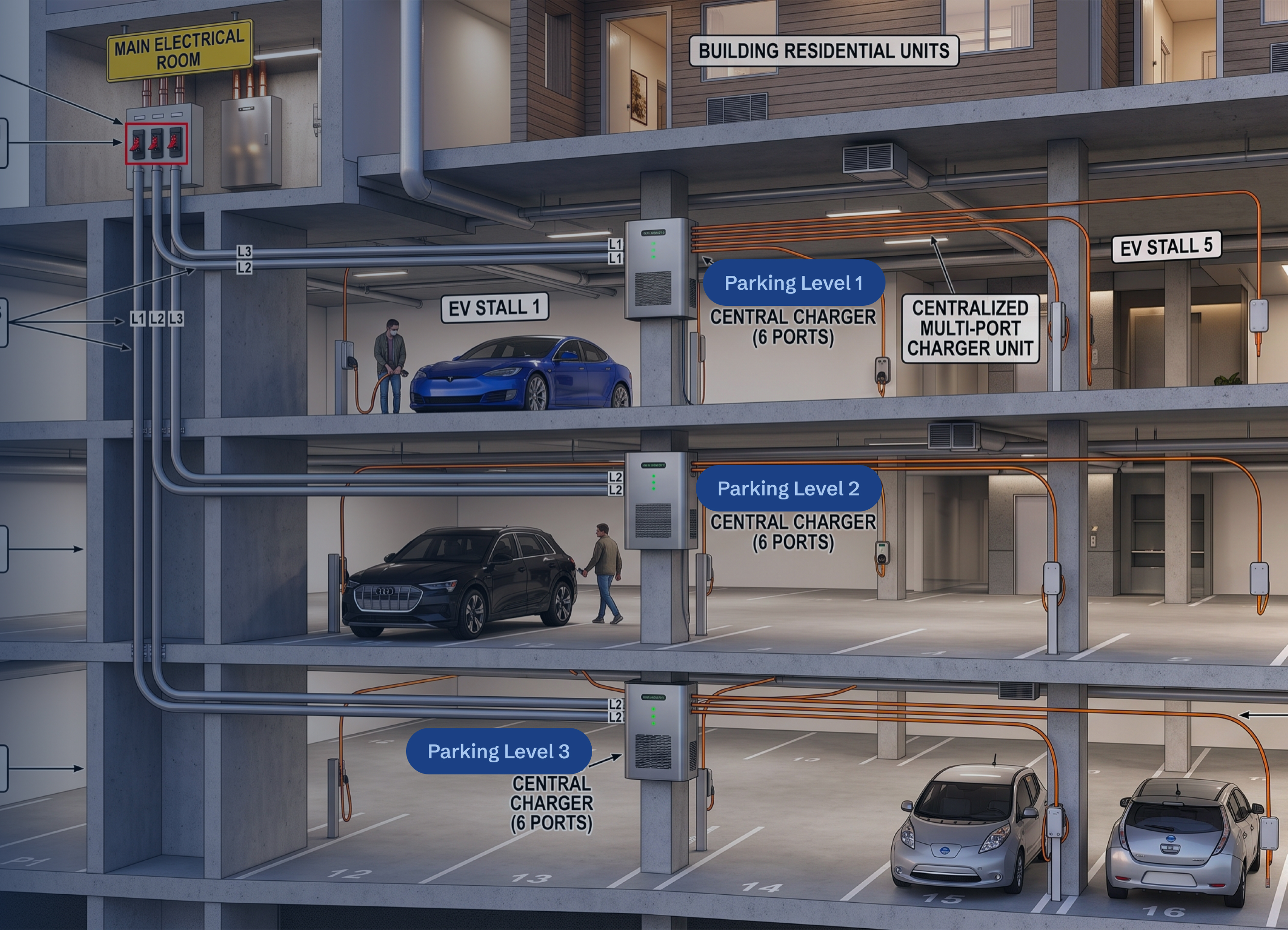 ⚡Multi-Level Centralized Charging
 CHOOSE YOUR CONFIGURATION
Choose the Right Solution for Your Site
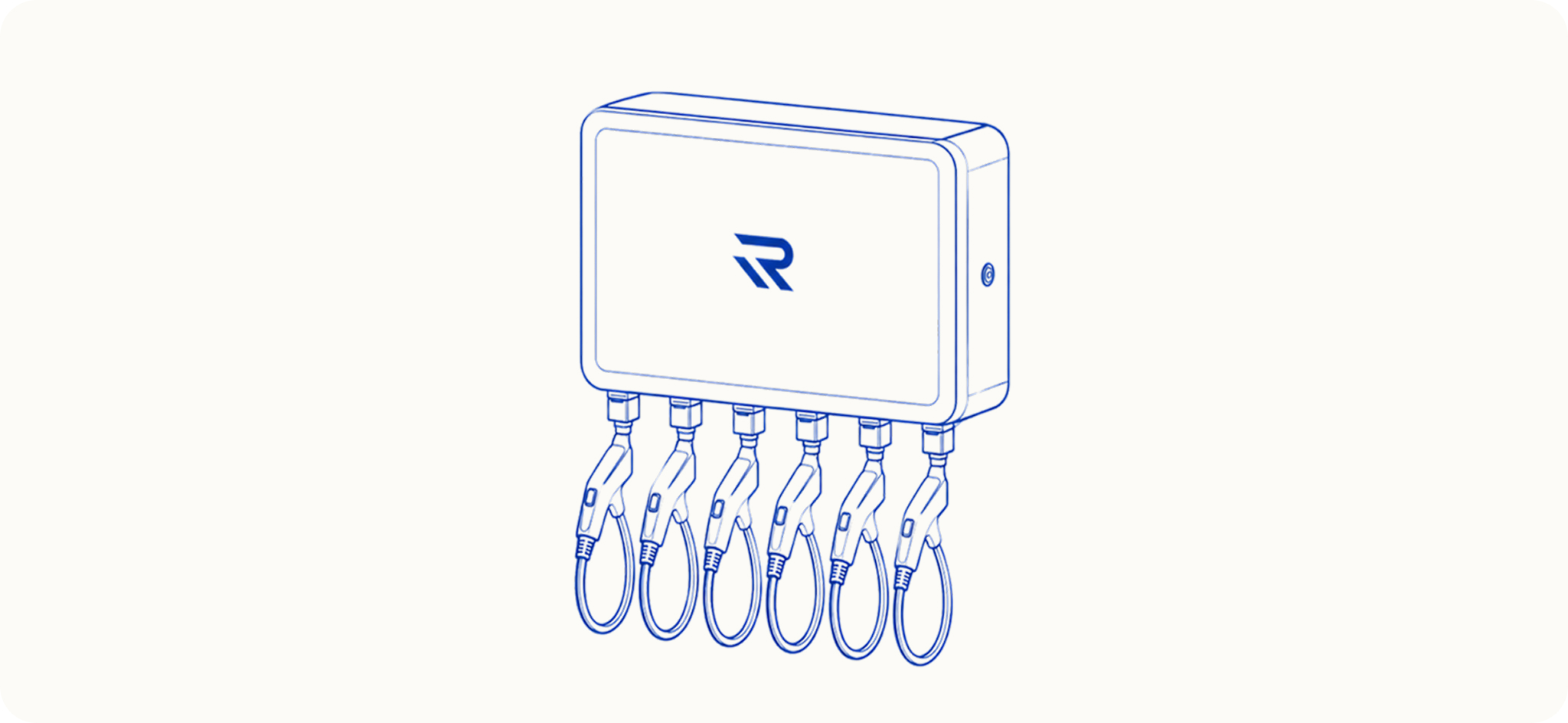
6-Port Centralized Charging Hub
Ideal for smaller installations, pilot projects, visitor parking and buildings with moderate EV charging demand.
KEY SPECIFICATIONS
FEATURES
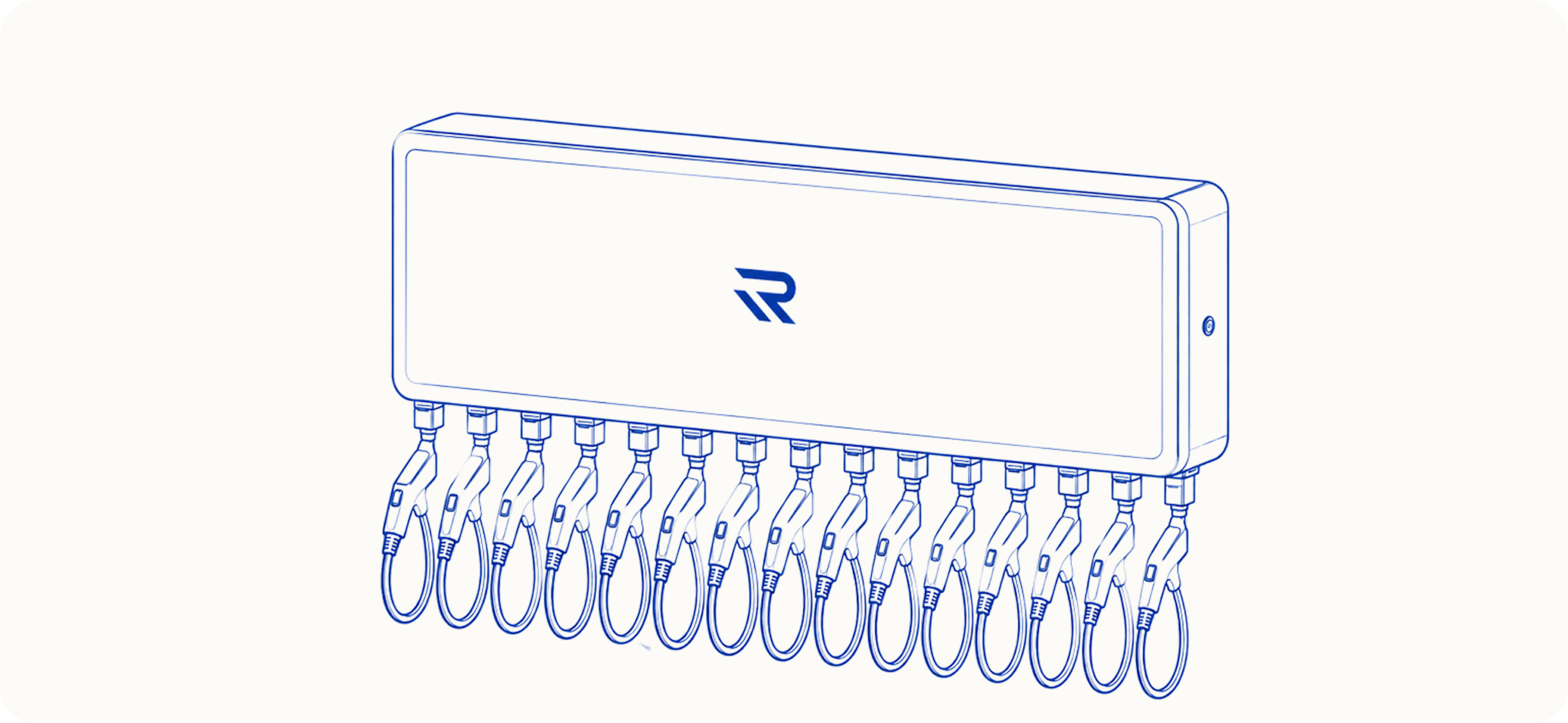
12-Port Centralized Charging Hub
Designed for larger installations requiring higher charger density and greater scalability.
KEY SPECIFICATIONS
FEATURES
CONFIGURATION USE-CASES
Built for every property type
Features dedicated resident authentication, multi-tenant billing, and optimized overnight load distribution.
Supports public credit-card payments, commercial load scheduling, and high-visibility parking spot monetization.
Enables high-throughput charging, priority dispatch routines, and deep software integrations for logistic tracking.
Constructed with secure air-gapped network options, strict authorization, and vandal-resistant outer frames.
WHY CENTRALIZED L2 HUB?
Less wiring.
Lower cost.
Smarter infrastructure.
One hub powers every stall. Fewer breakers, less copper, and less maintenance.
FEATURE COMPARISON
Traditional vs. our
centralized solution
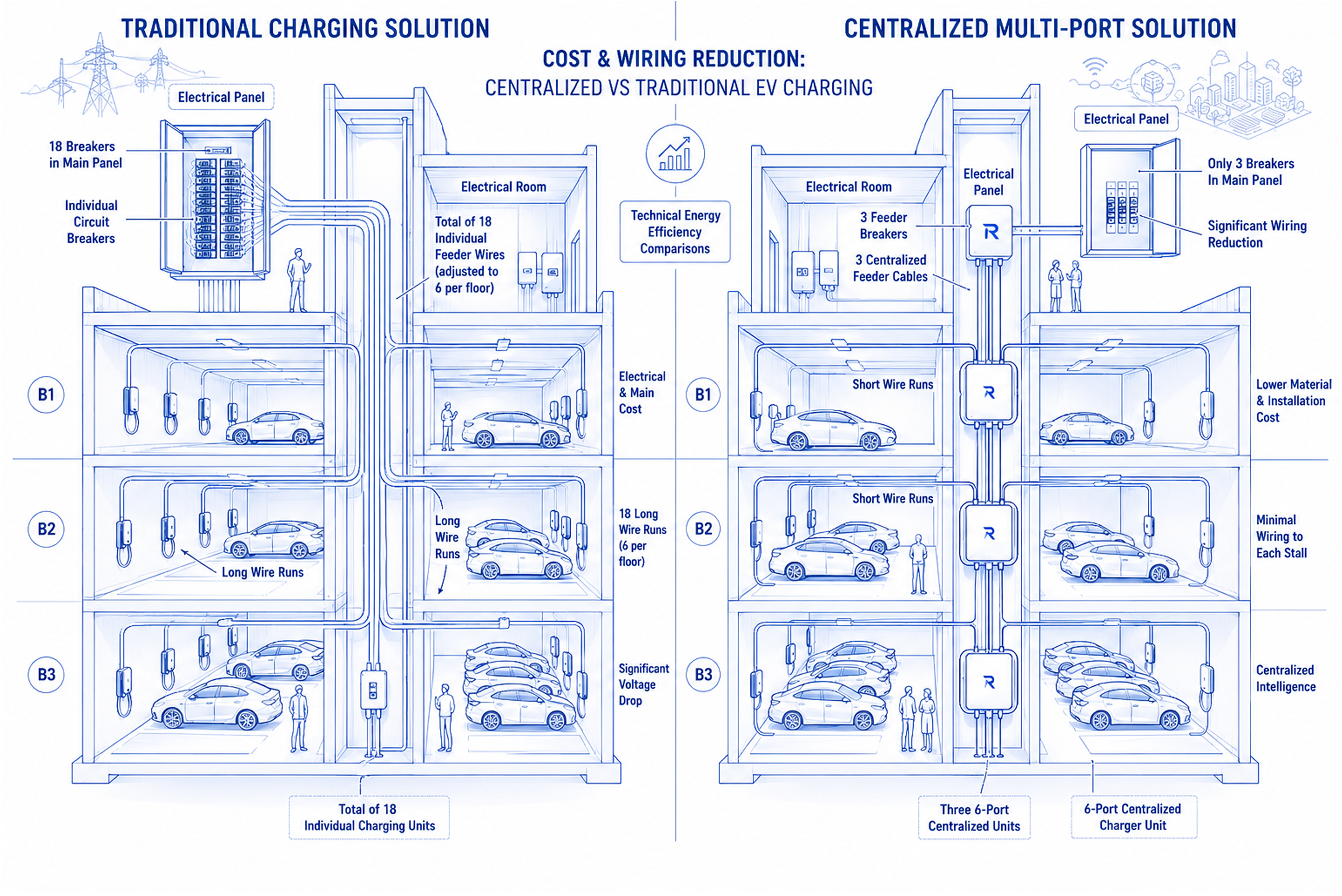
THE CENTRALIZED ADVANTAGE
Minimal wiring. Maximum savings.
Exponential wiring savings
One feeder cable per zone instead of dozens of long copper runs.
Lower maintenance & vandalism risk
Electronics housed securely in the central hub — not exposed at 18 individual parking spaces.
Minimized voltage drop
Short final runs from hub to stall ensure maximum efficiency and stable power delivery.
Streamlined aesthetics
Drivers get a clean plug at their stall. All hardware lives neatly out of sight in the hub.
PLUG & CHARGE VS. AUTO CHARGE
Plug & Charge vs. Auto Charge:
What's the Difference?
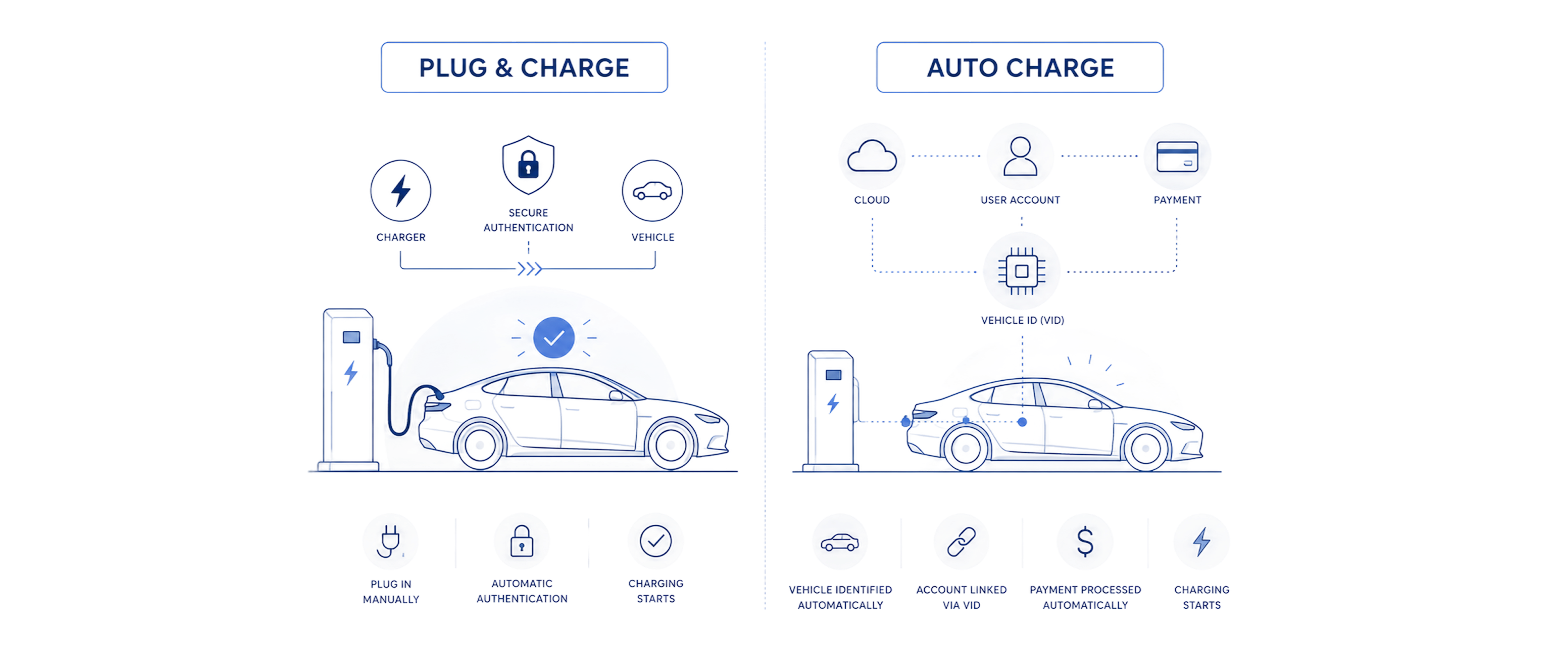
While both technologies let you skip the hassle of tapping an RFID card or opening an app every time you want to charge, they work differently under the hood. Here is how they compare.
Authentication Methods
Compare Plug & Charge vs Auto Charge
Side-by-side comparison of two charging authentication methods: Plug & Charge (ISO 15118, encrypted certificates, fully seamless) and Auto Charge (cloud-based VID/MAC lookup, account-linked, fast but may need a tap).
Plug & Charge The Secure Future
How it works: The moment you plug in, your car and the charger talk directly using encrypted digital certificates embedded in the vehicle.
The Experience: Completely seamless. Plug in, the session self-authenticates securely, and charging starts instantly.
Standard: Built on the global ISO 15118 standard, making it highly secure and universally compatible across different car brands and networks.
Auto Charge The Convenient Link
How it works: When you plug in, the charger reads your car's unique Vehicle ID (VID) or MAC address. It sends this ID to the cloud backend to find your pre-linked user account and payment info.
The Experience: Automatic and fast, though some networks may require a quick tap or confirmation on the screen to verify the account link.
Standard: A convenient, account-based solution used by specific charging networks as a bridge to seamless charging.
Dynamic Load Management
Smarter Charging.
Better Energy Utilization.
Raccodynamx's Dynamic Load Management technology intelligently distributes available power across connected EVs in real time, maximizing charging capacity while minimizing electrical infrastructure requirements.
Get a site assessment
HOW IT WORKS
Real-time distribution, not equal sharing
While traditional load sharing simply divides total power by the number of vehicles (leaving capacity on the table when one car is full), Raccodynamx takes a smarter approach.
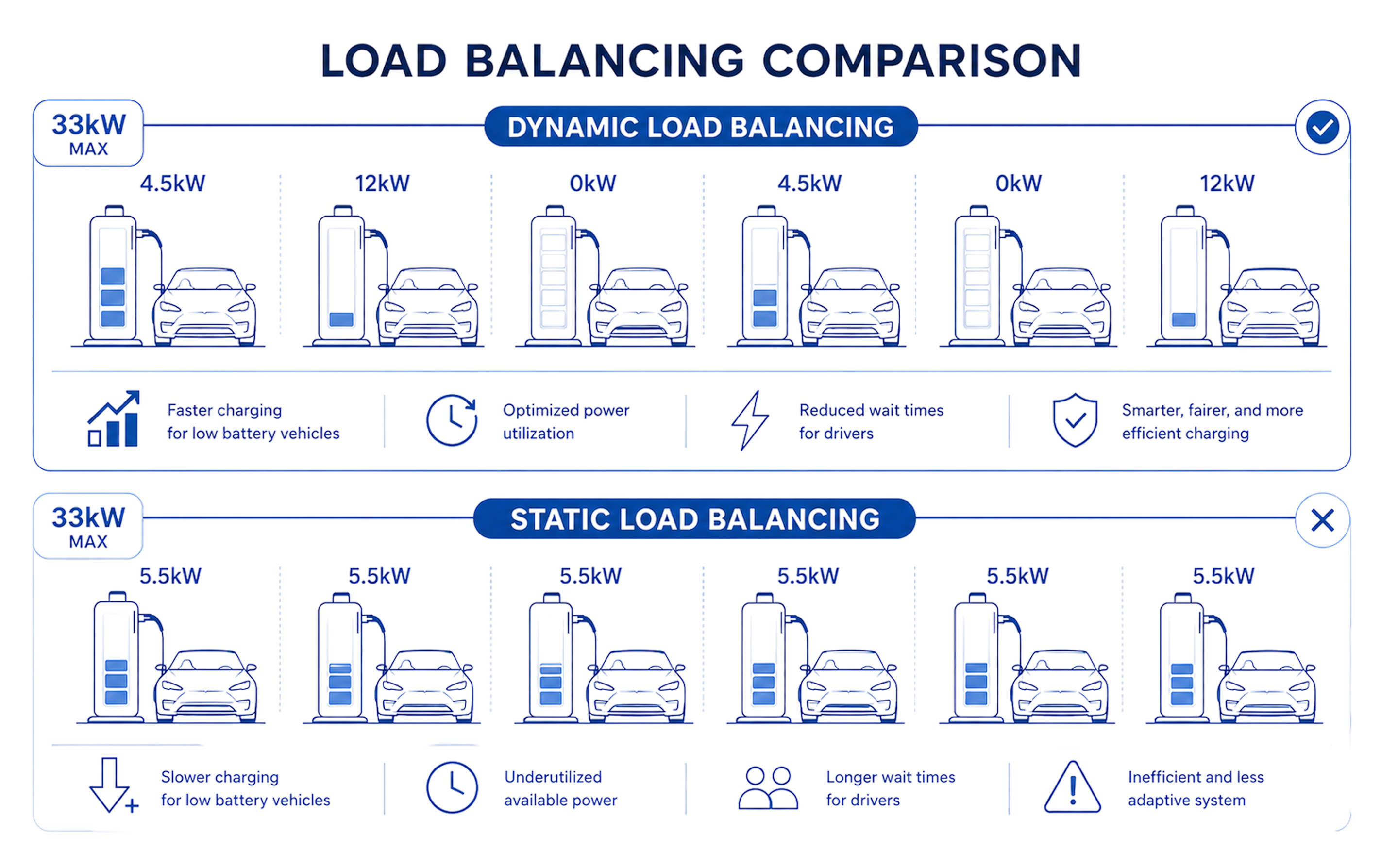
SIMULATION: 33kW TOTAL CAPACITY
FEATURE COMPARISON
Static Vs Dynamic Sharing
KEY BENEFITS
Efficiency that scales
Faster Charging
Redirects power from full cars to depleted ones, getting drivers back on the road up to 2x faster.
More Chargers per Site
Support more stalls on the same electrical panel without expensive service upgrades.
Lower Infrastructure Costs
Eliminate the need for additional transformers and heavy-duty cabling.
Improved Energy Utilization
Ensures every available kilowatt is being used effectively, never sitting idle.
Peak Demand Management
Intelligently throttles non-essential loads during high-cost utility peaks.
Future-Ready Platform
Software-defined balancing scales easily as your fleet and resident needs grow.
GET STARTED
Ready to upgrade your property?
Get a free site assessment and discover which charging configuration is right for your building.